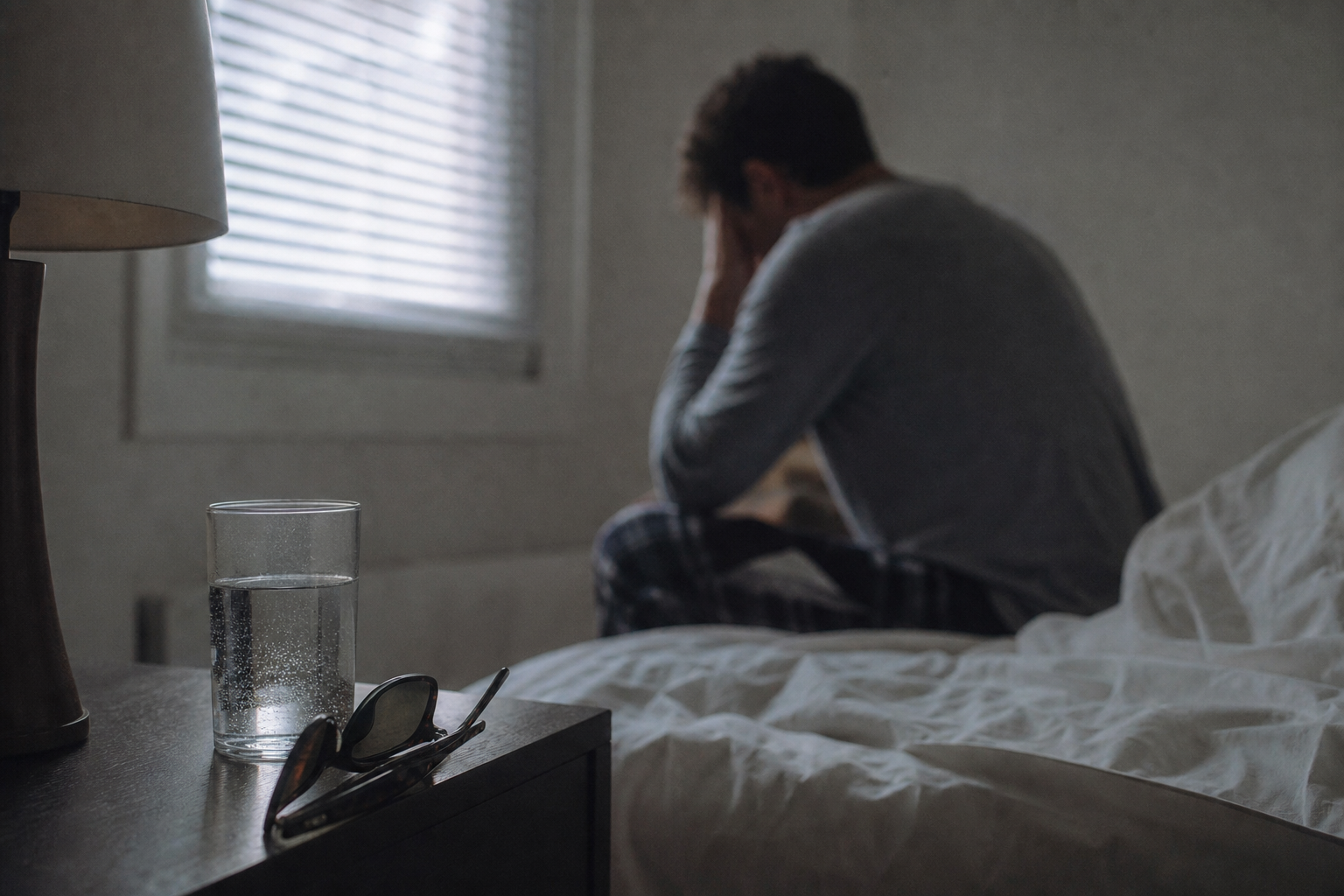
The headache ends but the migraine isn't over: that's postdrome.
The pain lifts and the fatigue, brain fog, and residual photophobia stay. Postdrome can outlast the headache. Here's how to move through the 72 hours after and track it when you can barely look at a screen.
The morning after the pain lifts
The pain lifts sometime before dawn and you expect to feel like yourself again. You don't. The head is quiet now, but you're wrung out, thoughts moving through syrup, the hallway light still a little too sharp on your eyes. Your neck is stiff. Someone asks how you're feeling and you say better, because the worst part is over and that's the word people want to hear. It isn't quite true. The attack has a second act, and almost nobody schedules around it.
The attack has a tail
Postdrome is the phase after the pain, and you already know it even if no app ever named it for you: the fatigue, the fog, the sense of having been scooped out. It can run a day or two, sometimes longer, and for a lot of people it's the part that actually costs them the day. The headache is loud, so it gets the attention. The tail is quiet, so it gets none. We built around this because every tracker we tried closed the record the moment the pain score hit zero, as if recovery were instant.
'You're better now' is the wrong finish line
The standard framing falls apart at the finish line. Your manager sees the sick day end when the migraine ends. Your partner sees you upright and assumes the hard part is behind you. Even your own logbook, if it stops at pain, tells the same story: attack over, back to normal. So you push. And pushing through postdrome is how a lot of people shorten the gap to the next one, because the exhaustion and the light sensitivity aren't leftovers, they're the condition still running. Counting only the headache hours undercounts what the migraine actually took.
What tends to help in the 72 hours after
None of this cures the phase, and you already know that. It's about not making the tail longer than it has to be.
Drink water and eat something plain, even when appetite is gone.
2. Keep the lights low and the screen dimmer than feels normal; residual photophobia is real, and bright light drags the fog out.
3. Move a little, not zero and not a full workout. A short slow walk helps some people; forcing exercise helps almost none.
4. Guard that night's sleep like it's part of the treatment, because it is.
5. Tell whoever needs to hear it that you're recovering, not recovered.
When it isn't postdrome
Postdrome should feel like a fading version of your usual attack. Get urgent care for a sudden, worst-ever headache, a fever with neck stiffness, new weakness or numbness, trouble speaking, or confusion beyond your usual fog. Those are not the tail of a migraine and need a clinician now.
Tracking when you can't focus is its own problem
The cruel irony: the phase most worth recording is the one where you can barely look at a screen to record it. Brain fog plus residual photophobia against a form with fifteen fields is why, for most people, the log just stops. Postdrome's answer is Aura Mode, a dimmed, high-contrast, low-tap view built for exactly that state. One thumb, a couple of taps, no glare, no typing. You mark that you're still in the tail, note whether it's fatigue or fog or light, and put the phone down. The timeline keeps running from the first prodrome sign through the last foggy afternoon, so what you show your neurologist is the whole attack, not just its loudest hour.
Count the whole thing
When you start logging the after-phase, the shape of your migraines changes on paper. A six-hour headache turns out to be a two-day event. Patterns you couldn't see start lining up: the foods, the sleep debt, the recovery windows that got cut short. That fuller record is what makes an insurer's appeal harder to wave off and a specialist appointment less of a guessing game. The migraine isn't over when the pain is. Your tracking shouldn't act like it is.
See your whole attack, tail and all, in Postdrome.
Postdrome was built around chronic and vestibular migraine after-phases specifically. The timeline keeps recording after the pain score hits zero, runs on-device for privacy, and is lifetime-priced with no subscription.