Most migraine recovery advice is built for the wrong phase.
Rest and hydrate treats photophobia, brain fog and fatigue as one problem. What each one needs in the 36 hours after the headache, and what drags it out.
Hour 30, and the coffee isn't working
The headache broke around midnight. By noon the next day you've done everything the recovery advice said: blackout curtains, a liter of water, back at the laptop because the inbox won't wait, a third coffee to push through the fog. And by 6pm you're slower than you were at breakfast. Words arrive late. The monitor feels like it's pressing on your eyes, and your neck has set like plaster.
Your effort isn't the problem.
Most of what gets written about migraine recovery is pain-phase advice with a postdrome label stuck on it. Some of it is harmless in the after-phase. A few pieces of it can quietly stretch a one-day hangover into two.
Wrong-phase advice
Call it wrong-phase advice: guidance designed for the hours when the headache is active, applied to the day or two after it ends. Dark room, stillness, caffeine, sleep. During the attack that kit makes sense, because the goal is to stop the pain or get through it.
The postdrome has a different goal. You're trying to bring a fogged, light-sensitive, worn-out nervous system back to baseline, and the symptoms that dominate this phase don't respond to the same things. Lump them together under "recovery" and you get the familiar result: you rested, you hydrated, and it still dragged on.
So the useful question isn't how to recover from a migraine. It's which postdrome symptom is running the show right now, and what that particular one needs.
Why 'rest and hydrate' feels like it never works
Rest and hydrate is fine as far as it goes. The trouble is that it treats residual photophobia, brain fog and fatigue as one condition, when each pulls in a different practical direction.
Light sensitivity is about the transition. Going straight from a blackout room to a full-brightness monitor is where residual photophobia tends to bite hardest, so a gentler ramp (dimmed, warmer screens, indoor light before outdoor, sunglasses outside) usually beats either extreme.
Fog is trickier. A whole day of total passivity can leave you just as foggy at dinner as you were at breakfast, but forcing deep work on extra caffeine is worse. Small, low-stakes tasks, one at a time, sit in the middle.
Fatigue is mostly about protecting the next night. A long late-afternoon nap feels like the obvious move and often pushes bedtime late, and sleep disturbance sits near the top of patient-reported trigger lists (Kelman's 2007 trigger survey in Cephalalgia is the classic reference). A short rest is the safer bet. So is skipping the hard workout meant to "reset" you.
Jumping from a blackout room straight to a full-brightness monitor
Brain fog
Small, low-stakes tasks one at a time; very light, non-stimulating movement such as a slow walk
Total passivity all day, or the opposite: forcing deep work on extra caffeine
Fatigue
Protecting the next night's sleep; a short rest instead of a long daytime sleep
A long late-afternoon nap that pushes bedtime late; a hard workout to "reset"
Neck stiffness
Gentle movement and position changes; heat if it usually helps you
Hours hunched in one posture over a laptop
Caffeine habit (heavy users)
Keeping intake near your normal daily amount and timing
Big morning-after swings: none during the attack, a lot the day after
Practical guidance for the after-phase, not a clinical protocol. Check it against your own logs and your clinician's advice.
What the research does and doesn't say
The best-cited picture of the after-phase comes from an electronic diary study by Giffin and colleagues, published in Neurology in 2016. Patients logged symptoms as attacks happened, and 81% reported at least one non-headache symptom after the pain had resolved. Tiredness and difficulty concentrating were among the most common. In Giffin et al. (Neurology 2016), tiredness was reported in 88% of postdromes, difficulty with concentration in 56%, and stiff neck in 42%. ([source](https://core.ac.uk/download/pdf/269292205.pdf)). That's the basic case for treating postdrome as its own phase. It's the norm, not an edge case.
Caffeine is where the evidence is firmest, though it's indirect. The International Classification of Headache Disorders (ICHD-3) lists caffeine-withdrawal headache as its own diagnosis in regular heavy users. ICHD-3 8.3.1 describes headache developing within 24 hours after regular consumption of caffeine exceeding 200 mg/day for more than 2 weeks, which has been interrupted. ([source](https://ichd-3.org/8-headache-attributed-to-a-substance-or-its-withdrawal/8-3-headache-attributed-to-substance-withdrawal/8-3-1-caffeine-withdrawal-headache/)). For a heavy coffee drinker, an attack often means no caffeine during the headache and a lot the morning after. Whatever that swing costs you lands right on top of the fog. That's an inference, not a postdrome trial result, but it's a reasonable one.
Light activity is the thinnest part of the picture. Some people find that very light, non-stimulating movement helps them come out of the after-phase, but that is patient-reported practice, not something research has shown. Controlled trials of postdrome-specific management are scarce. No trial has directly tested how to shorten or treat postdrome, and no treatment is aimed specifically at it. What exists is indirect evidence on things like early triptan use, sleep, hydration and triggers, so tracking your own recovery against those variables is the practical way to see what helps you.
Established vs. inferred
Established: non-headache symptoms after the pain resolves are common (Giffin et al., Neurology 2016). Recognized diagnosis: caffeine-withdrawal headache (ICHD-3). Inferred or tentative: that caffeine swings or total passivity extend your postdrome specifically. Treat those as things to test in your own logs, not settled facts.
Hours 12 to 36, walked through
Take a common shape. The attack starts Tuesday evening, you take a triptan around 8pm, and the pain is gone by midnight. Wednesday is the postdrome day. Here are two ways it can go.
Version A: blackout curtains until noon. Then four hours at a laptop on full brightness, three coffees instead of your usual one, a two-hour nap at 5pm, asleep at 1am. Thursday morning, the fog is still there and the screen still hurts.
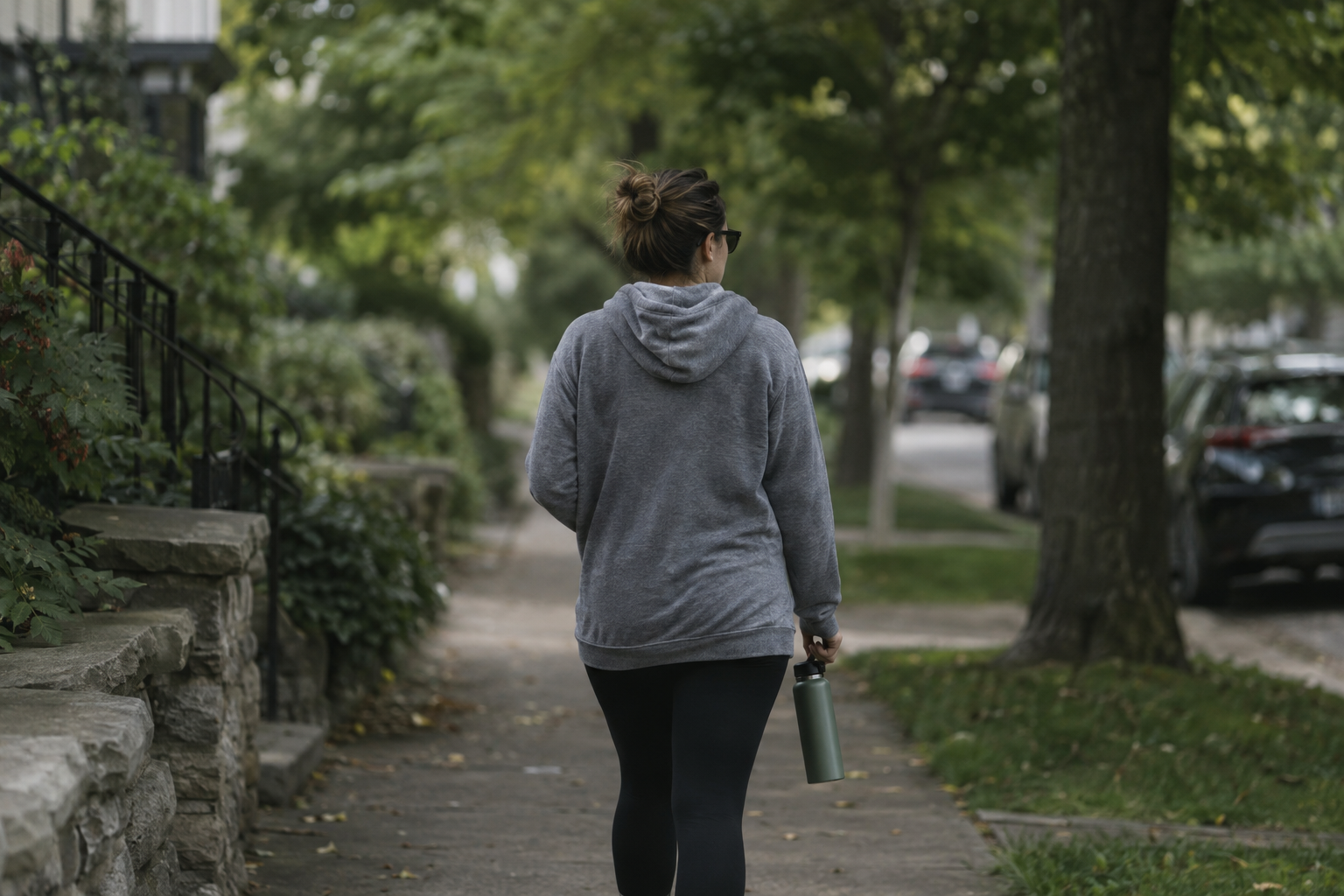
Version B: lamp light and a dimmed phone in the morning. Your normal coffee at your normal time. One small task before lunch, then a fifteen-minute slow walk with sunglasses on. No long nap. Bed at your usual hour.
No one can promise that B shortens your postdrome. What it does is change a few variables in a controlled way, and that's the only route to learning which ones matter for you.
Your recovery pattern lives in hours 12 to 36
Postdrome varies a lot from person to person, which is exactly why generic advice keeps missing. The answer for you is sitting in data most people never collect, because memory and most tracking stop the moment the pain stops.
Log the after-phase like you log the attack. When the headache ended. Light exposure and screen time. Caffeine amount and timing. Sleep and naps. Any movement. When the fog lifted, and when the light sensitivity faded.
After five or six attacks you can start comparing. Maybe your fog clears faster on days you walk. Maybe the extra coffee is what keeps your Thursdays heavy. Either way it's your pattern, and it's specific enough to bring to a neurologist.
Most attacks get logged until the pain stops. The recovery happens after.
Where Postdrome fits
We built Postdrome because the apps we tried treated the end of the headache as the end of the attack. In Postdrome the timeline stays open after the pain resolves, so fog, residual photophobia, neck stiffness and fatigue log as part of the same episode, alongside caffeine, sleep and activity.
Aura Mode keeps logging usable when you can't see straight, which matters on exactly the days this data gets made. Your entries stay on your device, you can export them for an appointment, and the price is a one-time lifetime purchase, not a subscription.
When it isn't just a slow postdrome
A foggy, light-sensitive day after an attack is common. Some things aren't, and they're worth a call rather than another log entry.
Contact a clinician if
Your after-phase runs much longer than your usual pattern, or you notice new weakness, numbness, trouble speaking, or confusion that feels different from your usual fog, vision loss, an aura lasting longer than an hour, or a headache that is the worst of your life or unlike your typical attacks. Seek emergency care for sudden severe symptoms.
Start logging the after-phase
Postdrome is a migraine tracker that keeps the timeline open after the headache ends, so the 12 to 36 hours of fog, light sensitivity and fatigue get logged as part of the same attack. Aura Mode works when you can't see straight, data stays on your device and exports for appointments, and it's a one-time lifetime purchase with no subscription.